

Vor ein paar Tagen hatte ich hier beschrieben, wie ein Arduino mit der Arduino IDE geflasht wird. Als Java-Entwickler will man am Besten alles in Eclipse machen. Also auch die Arduino-Programmierung. Das geht auch mit dem Eclipse C++ IDE for Arduino 2.0. Für den Anfang ist wohl die Arduino IDE etwas einfacher zu bedienen. Aber mit dieser Anleitung geht es auch in ca. 1 Stunden. Also los …
Über den Eclipse Marketplace installieren:
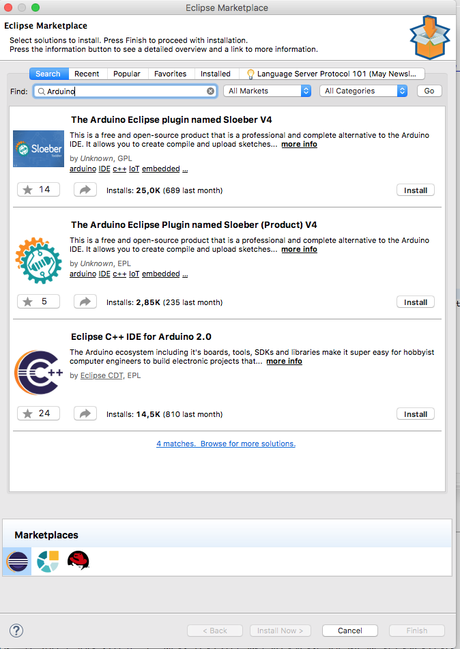
Das dauert etwas …
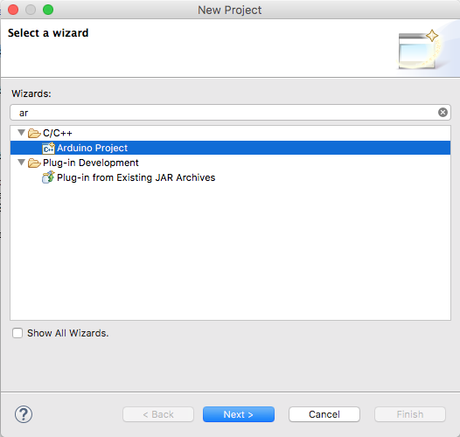
Dann ein Arduino Projekt anlegen:
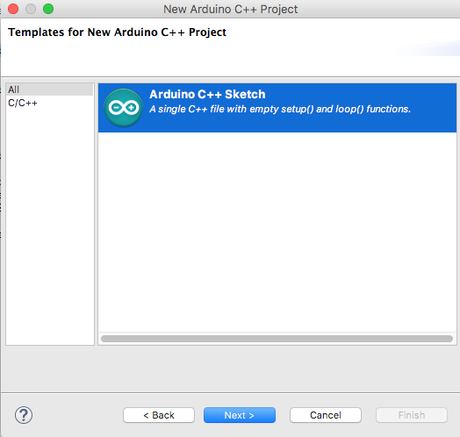
Es gib nur ein Template:
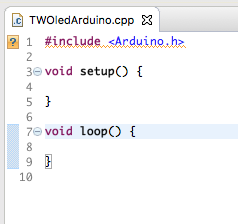
Das CPP Gerüst wird dann schon mal erzeugt:
Nun brauchen wir einmalig eine Connection vom Typ Arduino
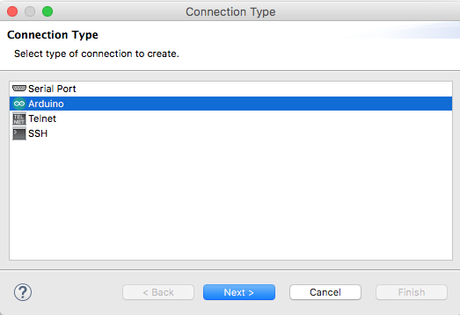
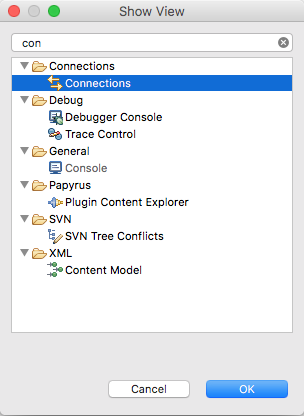
Mit ein paar Parametern zur Schnittstelle:
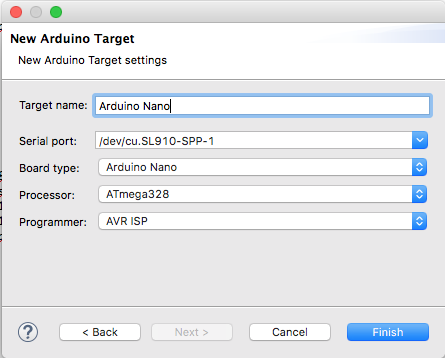
In meinem Fall das Arduino Nano Board:
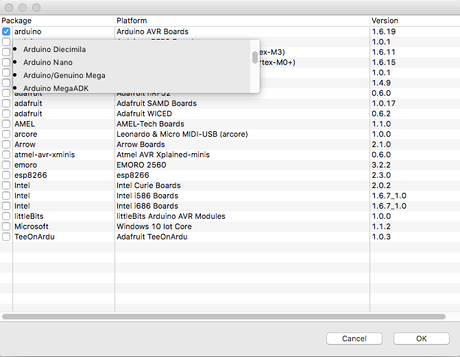
Und für ein Beispielprojekt eine Lib (ug8lib) für das Display:
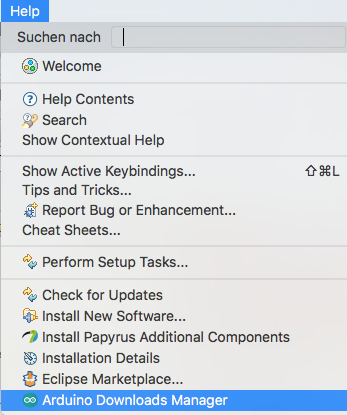
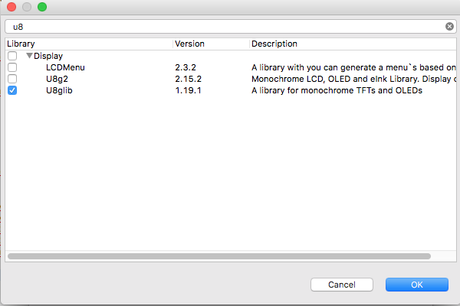
Nun kann die Lib auch dem Projekt hinzugefügt werden:
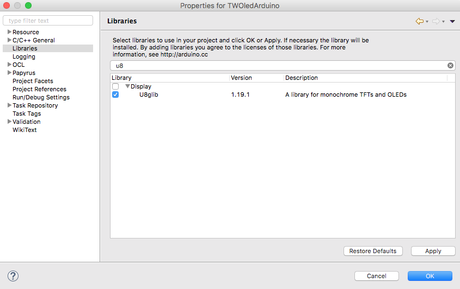
Nun ersetzen wir das Template mit diesem Beispiel Programm:
#include <Arduino.h>

#include "U8glib.h"

U8GLIB_SSD1306_128X64 u8g(U8G_I2C_OPT_NONE | U8G_I2C_OPT_DEV_0);

void drawTest(void) {
	u8g.setFont(u8g_font_unifont);
	u8g.drawStr(0, 20, "OK, Start...");
}

void setup() {

	u8g.firstPage();
	do {
		drawTest();
	} while (u8g.nextPage());
}

void loop() {

	delay(2000);

	u8g.firstPage();

	do {
		u8g.setFont(u8g_font_osb18);
		u8g.setFontPosTop();
		u8g.drawStr(10, 10, "Dont give");
		u8g.drawStr(10, 30, "up! Eclipse");

	} while (u8g.nextPage());
}
TIP! Dabei beachten, das im Gegensatz zur Arduino IDE noch ein
#include <Arduino.h>
hinzugefügt werden muss. Sonst gibt es Compile-Fehler, das Methoden nicht gefunden werden.
Jetzt oben auf den Hammer in der Toolbarleiste für den Build und dann ein klick auf den grünen Run Button, und schon wird das Programm auf den Nano hochgeladen.
avrdude: Version 6.3, compiled on Jan 17 2017 at 12:01:35
         Copyright (c) 2000-2005 Brian Dean, http://www.bdmicro.com/
         Copyright (c) 2007-2014 Joerg Wunsch

         System wide configuration file is "/Users/userdir/.arduinocdt/packages/arduino/tools/avrdude/6.3.0-arduino9/etc/avrdude.conf"
         User configuration file is "/Users/userdir/.avrduderc"
         User configuration file does not exist or is not a regular file, skipping

         Using Port                    : /dev/cu.usbserial-A9SV31TT
         Using Programmer              : arduino
         Overriding Baud Rate          : 57600
         AVR Part                      : ATmega328P
         Chip Erase delay              : 9000 us
         PAGEL                         : PD7
         BS2                           : PC2
         RESET disposition             : dedicated
         RETRY pulse                   : SCK
         serial program mode           : yes
         parallel program mode         : yes
         Timeout                       : 200
         StabDelay                     : 100
         CmdexeDelay                   : 25
         SyncLoops                     : 32
         ByteDelay                     : 0
         PollIndex                     : 3
         PollValue                     : 0x53
         Memory Detail                 :

                                  Block Poll               Page                       Polled
           Memory Type Mode Delay Size  Indx Paged  Size   Size #Pages MinW  MaxW   ReadBack
           ----------- ---- ----- ----- ---- ------ ------ ---- ------ ----- ----- ---------
           eeprom        65    20     4    0 no       1024    4      0  3600  3600 0xff 0xff
           flash         65     6   128    0 yes     32768  128    256  4500  4500 0xff 0xff
           lfuse          0     0     0    0 no          1    0      0  4500  4500 0x00 0x00
           hfuse          0     0     0    0 no          1    0      0  4500  4500 0x00 0x00
           efuse          0     0     0    0 no          1    0      0  4500  4500 0x00 0x00
           lock           0     0     0    0 no          1    0      0  4500  4500 0x00 0x00
           calibration    0     0     0    0 no          1    0      0     0     0 0x00 0x00
           signature      0     0     0    0 no          3    0      0     0     0 0x00 0x00

         Programmer Type : Arduino
         Description     : Arduino
         Hardware Version: 2
         Firmware Version: 1.16
         Vtarget         : 0.0 V
         Varef           : 0.0 V
         Oscillator      : Off
         SCK period      : 0.1 us

avrdude: AVR device initialized and ready to accept instructions

Reading | ################################################## | 100% 0.00s

avrdude: Device signature = 0x1e950f (probably m328p)
avrdude: reading input file "./Anzeige.hex"
avrdude: writing flash (17700 bytes):

Writing | ################################################## | 100% 8.89s

avrdude: 17700 bytes of flash written
avrdude: verifying flash memory against ./Anzeige.hex:
avrdude: load data flash data from input file ./Anzeige.hex:
avrdude: input file ./Anzeige.hex contains 17700 bytes
avrdude: reading on-chip flash data:

Reading | ################################################## | 100% 7.52s

avrdude: verifying ...
avrdude: 17700 bytes of flash verified

avrdude done.  Thank you.
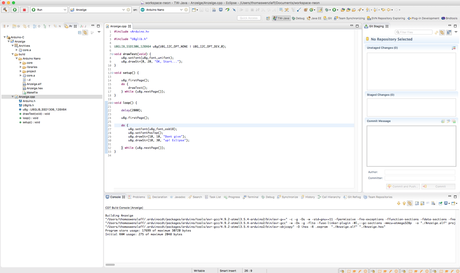
Hier noch ein Foto der IDE:
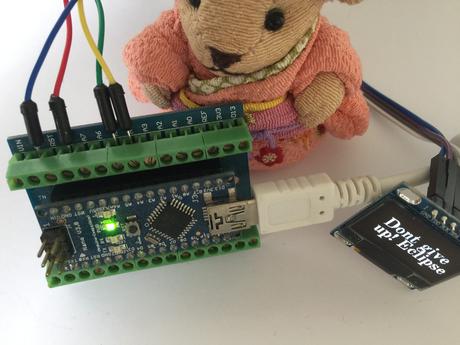
Und hier das Ergebnis „Dont give up! Eclipse“:
Ähnliche Artikel:
- Arduino IDE für den ESP8266 nutzen (Entwicklung und Upload)
- Arduino: Wie können RFID Tags eingelesen werden?
- Eclipse go to Mars 4.5 Release oder wie wird Eclipse Mars auf dem Mac OS X installiert?